
October 22, 2026 · Guides
Why Do African Grey Parrots Pluck Their Feathers?
Why do African grey parrots pluck their feathers? There is rarely a single cause. African grey feather plucking can come from a medical problem, stress, boredom, poor diet, a poor environment or a mix of these. Because many causes are medical, the first step is always a visit to an avian vet, not a guess.
Starting out with a grey? See our hand-reared African greys
Plucking, barbering and overpreening
Feather plucking means a bird pulling out its own feathers, usually on the chest, legs, wings and flanks. Some birds chew feathers without removing them, which looks ragged. A bird cannot reach its own head, so missing head feathers usually point to another cause such as mites, a skin problem or a cage-mate.
Common causes of feather plucking in African greys
Medical causes
Skin infections, parasites, allergies, liver or kidney disease, nutritional deficiencies and pain can all trigger plucking. Only a vet can rule these in or out. This is why a vet exam comes before any behaviour fix.
Diet
Seed-heavy diets lack key nutrients and are linked to poor feather and skin health. Most avian vets recommend a formulated pellet base with fresh vegetables. Ask your vet what suits your bird.
Boredom and lack of stimulation
Greys are intelligent and need work for their beaks and minds. Without foraging toys, shreddable items and company, a bird can turn to its own feathers. See our enrichment and toys guide.
Stress and change
A move, a new pet, changes in routine, loud or chaotic homes, poor sleep or loneliness can all cause stress. Greys are sensitive birds and may react to changes people barely notice.
Environment
Very dry air, a cage that is too small, lack of bathing or showering, and lack of regular sleep can contribute.
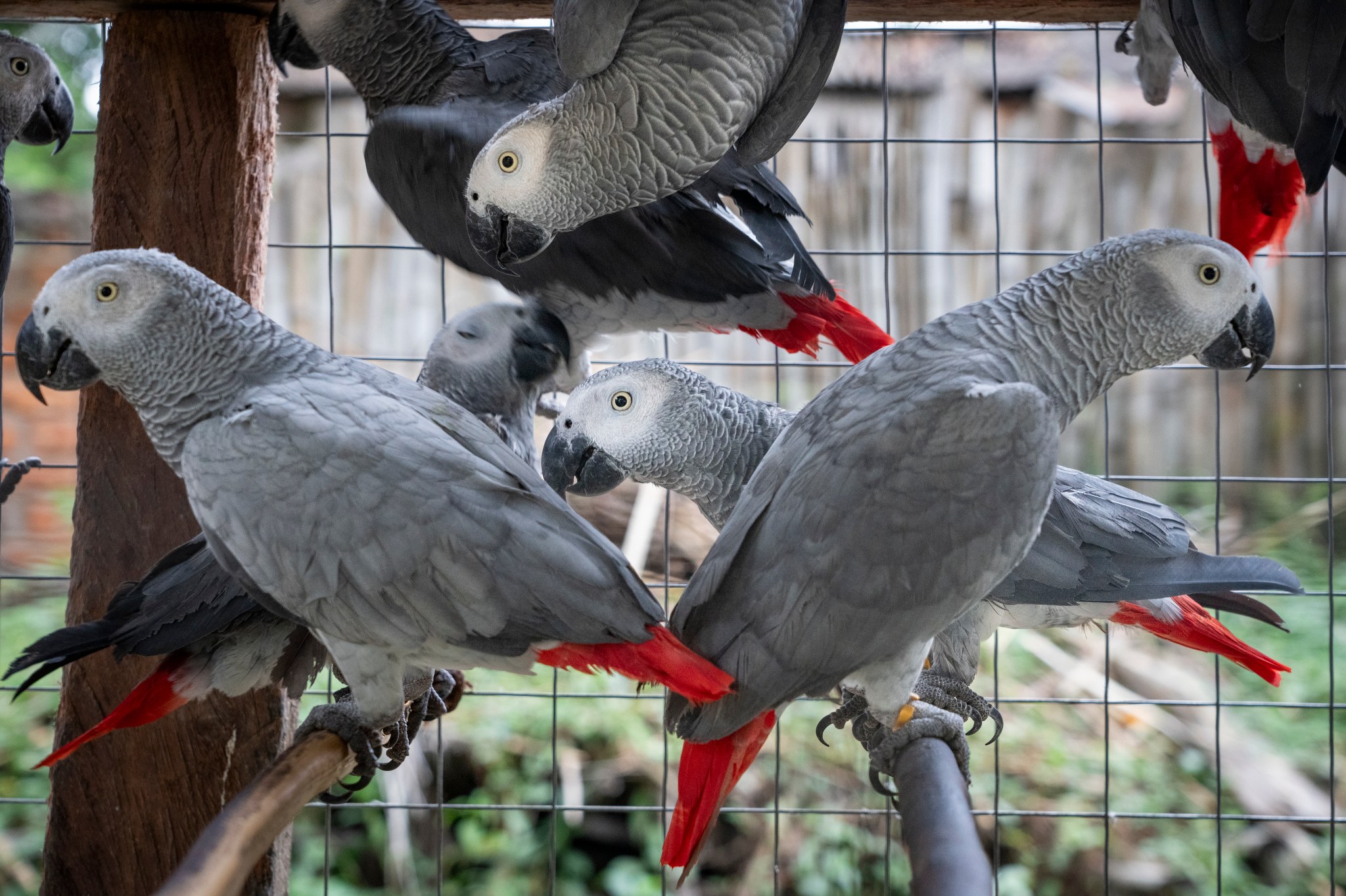
What to do if your grey is plucking
- Book an avian vet visit. Describe when the plucking began and what changed. Read how to choose an avian vet.
- Review diet. Follow your vet’s advice on pellets, vegetables and any supplements.
- Add enrichment. Foraging toys, safe things to shred, music and variety.
- Protect sleep. Aim for 10 to 12 hours of quiet darkness.
- Keep a routine. Consistent times for food, play and sleep.
- Do not punish. Scolding adds stress. Reward calm behaviour instead.
Some birds need extra help, such as medication or a behaviour plan from an avian vet. Collars and similar devices should be used only on professional advice.
Can feather plucking be prevented?
Often it can be reduced. Starting with a well-socialised, hand-reared bird that is fully weaned, plus daily interaction, a varied diet, enrichment, regular sleep and routine vet checks, gives a grey the best chance of a healthy coat. No one can guarantee a bird will never pluck.
Frequently asked questions
Will the feathers grow back?
If the follicle is not damaged and the cause is resolved, feathers often regrow. Long-standing plucking can be harder to reverse.
Is plucking always a sign of a behaviour problem?
No. Medical causes are common, so a vet check always comes first.
Are African greys more prone to plucking than other parrots?
Greys are often mentioned as prone to feather-destructive behaviour, probably because they are sensitive, intelligent birds. It is not inevitable.
Start with a healthy, hand-reared grey
Every Grey Haven bird is hand-reared, DNA sexed, vet checked and fully weaned before it goes home. Check availability and pricing or join the waiting list.